

Better Methods. Better Performance. Better Outcomes.
For decades, the industry has manufactured travel bags and towels the same way: spray-on coatings that wear off quickly, chemical adhesives that release toxins during production, synthetic materials chosen solely for cost, products designed to be replaced every few months.
We asked a different question: What if we chose manufacturing processes specifically because they're cleaner, safer, and more sustainable, then engineered them to outperform conventional methods?
Thermal bonding instead of chemical adhesives. Not because it's trendy, but because heat and pressure create permanent waterproof bonds that last 300+ wash cycles while eliminating VOC emissions during production.
PFOA-free stain resistance instead of forever chemicals. Not to check an eco box, but because plant-based nanotechnology performs just as effectively without persisting in waterways for centuries.
Silver-ion antimicrobial treatment bound into fabric instead of spray coatings. Not as compromise, but because permanent integration works better than temporary chemical sprays that wash out after a few cycles.
Organic cotton and sustainable bamboo instead of conventional materials. Not despite the cost, but because pesticide-free cultivation produces superior fabric while eliminating chemical contamination.
These aren't trade-offs. They're intentional choices that cost more, require specialized manufacturing, and demand higher standards, because we believe they produce genuinely better products.
This page explains exactly what we do differently, why we chose these methods, and how they create performance advantages you can measure.
Welcome to innovation that actually works.

Superior Repellency, Zero Forever Chemicals
The best stain-resistant treatments use PFOA and PFOS—fluorinated compounds that create exceptional water and oil repellency. They're also "forever chemicals" that persist in the environment indefinitely, bioaccumulate in living organisms, and contaminate water systems globally.Most manufacturers use them anyway because they work, they're cheap, and alternatives require more investment.We chose plant-based nanotechnology instead. Not as compromise—as upgrade.
Why We Chose This Method
PFOA and PFOS don't break down. When products containing them are washed, the chemicals enter waterways where they remain for decades. They accumulate in fish, wildlife, and eventually humans. The environmental cost of using them is permanent.We engineered stain resistance that performs identically to fluorinated treatments but breaks down naturally at end-of-life. Water, oils, dirt, and stains bead up and roll off fabric surfaces just as effectively—but without introducing persistent pollutants into ecosystems.


How it Works
Plant-based nanotechnology modifies fabric surface at a molecular level, creating microscopic barriers that repel liquids and prevent stain penetration. This works through physical surface properties rather than chemical coatings—nano-scale surface architecture that causes liquids to form beads instead of spreading.The treatment integrates during manufacturing and survives hundreds of wash cycles. It's not a spray-on coating that wears off—it's structural modification of the fabric surface itself.
What we've eliminated:
- PFOA
- PFOS
- All C8 and C6 fluorinated compounds- Forever chemicals that persist in waterways for centuries
The Real World Difference
Your bag sits poolside. Sunscreen-covered hands touch the fabric. The oils bead up and wipe away cleanly, no staining, no residue. You set the bag on a damp locker room bench. Moisture doesn't penetrate. Sand and dirt brush off instead of embedding in fibers.This isn't theoretical performance. It's how the bags actually work in beach environments, gym settings, and travel scenarios where exposure to water, oils, and dirt is constant.And when you wash them, you're not releasing persistent chemicals into water systems. The stain resistance remains effective, but what washes off breaks down naturally.
We chose the harder path because the performance is equivalent and the environmental outcome is measurably better. That's not virtue signaling—that's engineering.

Waterproof Thermal Bonding: Why Heat Outperforms Chemicals
Traditional waterproofing uses chemical adhesives to bond waterproof layers to fabric. It's fast, it's cheap, and it fails predictably—the adhesives break down with washing and heat, waterproofing degrades within months, and the manufacturing process releases volatile organic compounds (VOCs) into the atmosphere.We chose thermal bonding instead: using heat and pressure to permanently fuse polyurethane laminate (PUL) film directly into fabric structure at a molecular level. No chemical adhesives. No solvents. No VOCs.
Why we chose this method:
Chemical-free manufacturing matters. Solvent-based processes release harmful compounds that contribute to air pollution and create toxic waste requiring environmental disposal. Thermal bonding eliminates these emissions entirely while creating safer working conditions in manufacturing facilities.
Performance
Thermally bonded waterproofing doesn't degrade. The PUL becomes an inseparable part of the fabric, it can't delaminate, peel, or wear off the way chemical adhesives do. Testing shows our waterproofing maintains full integrity through 300+ wash cycles. Most spray-coated bags fail within 10-20 washes.The process also produces more flexible, softer fabric. Chemical adhesives make materials stiff and plastic-like. Heat bonding creates suppleness while delivering complete impermeability to moisture.

How it Works
PUL film and fabric are subjected to precise heat and pressure that causes molecular bonding. The film fuses into the fabric structure permanently. This is the same technology used in medical textiles and reusable medical gowns applications where waterproof reliability is non-negotiable and products must withstand hundreds of industrial wash cycles without performance loss.

Dual Layer Construction
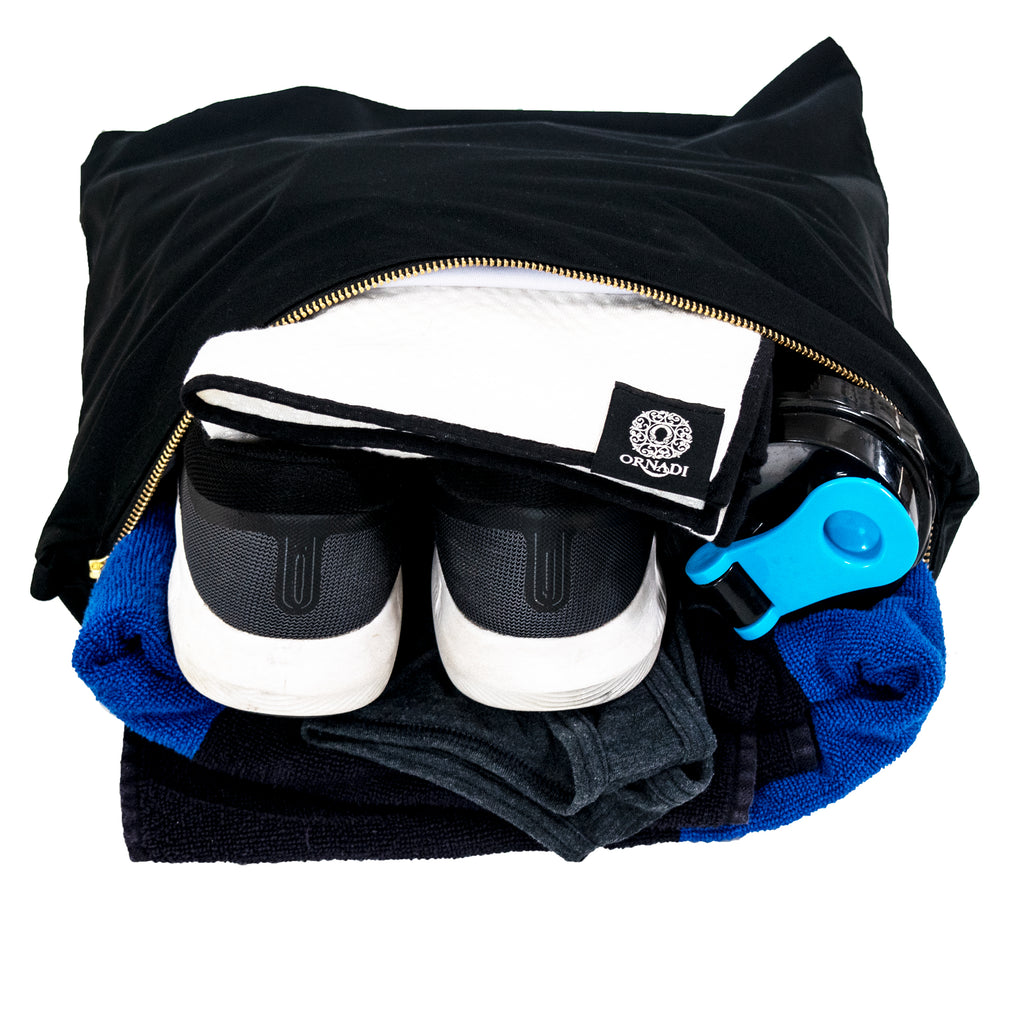
We apply thermal bonding to both fabric layers in our bags. The outer layer has PUL bonded to its reverse side. The inner layer has PUL bonded to its reverse side. Two separate waterproof barriers working simultaneously, if one layer were somehow compromised, the second maintains complete moisture containment.

What it Eliminates
- Volatile organic compound (VOC) emissions: 0 per unit manufactured
- Chemical solvent use: 0
- Toxic waste generation: 0
- Performance degradation from washing: None through 300+ cycles
- Frequent replacement that increase emissions

What it Creates
- Permanent waterproof protection that performs identically on day one and year three
- Softer, more flexible materials despite being completely waterproof
- Safer manufacturing without chemical exposure
This costs more to manufacture. It requires specialized equipment. Not every facility can do it.
We chose it anyway, because it's better.

Permanent Integration
Most antimicrobial treatments use surface-applied sprays, chemical agents that sit on fabric and wash out within 10-20 cycles. They work temporarily, then fail. Consumers replace the product or buy chemical sprays to retreat it. The cycle continues. We chose permanent silver-ion technology bound into fabric fibers during manufacturing not because it's easier (it's not), but because it works better and lasts indefinitely.
Why we chose this method:
Antimicrobial sprays washing out creates two problems. First, they enter waterways with every laundry cycle, contributing to aquatic chemical pollution. Second, once they've washed out, the product loses its antimicrobial function, forcing replacement or chemical re-treatment. Permanent integration solves both. The silver-ion treatment stays in the fabric through 300+ wash cycles. Nothing washes out. The bag inhibits bacterial growth on its surfaces for its entire lifespan, which extends that lifespan by preventing the permanent odors that typically force people to replace bags after a few months.

How it Works
Silver ions (Ag+) are integrated into fabric fibers at the molecular level during manufacturing. When microorganisms contact treated surfaces, the ions disrupt bacterial cellular functions, inhibiting growth and reproduction. This is continuous, passive protection. The silver ions remain active in the fabric. Each time bacteria encounter the surface, the same mechanism activates. The treatment is a permanent part of the material structure. Silver has been used for antimicrobial purposes for centuries. Modern textile science has refined this into durable, wash-safe integration that works reliably through hundreds of laundry cycles.
Odor Free Advantage
The antimicrobial treatment inhibits bacterial growth on the bag's surfaces. This prevents the bag itself from becoming a breeding ground for bacteria and developing the permanent musty smell that makes traditional bags unusable after a few months.
By keeping the bag fresh, the treatment extends product lifespan from months to years. Customers don't replace Ornadi bags because they smell, they use them until the fabric eventually wears out after years of heavy use.

Extended Benefits
What this eliminates:
- Chemical spray applications requiring repeated re-treatment
- Antimicrobial agents washing into waterways every laundry cycle-
- Product replacement forced by permanent bacterial odors
- Consumer purchase of separate odor-fighting chemicals and sprays
What it creates:
- Permanent antimicrobial protection lasting 300+ wash cycles
- Bags that stay fresh through years of use
- Reduced need for harsh chemical cleaners
- Extended product lifespan that reduces replacement waste
Safety verification:
Independent testing confirms it's non-toxic, non-irritating to skin, and safe for products contacting skin and clothing. The treatment works on the bag's surfaces, it doesn't sanitize contents, and it doesn't eliminate the need to wash your clothes. But it prevents the bag from developing permanent odor that survives washing, which is why these bags last years while traditional bags last months.
We engineered permanent protection because temporary solutions create permanent problems.

Why we chose natural fibers that cost more but deliver superior results

Organic Cotton
Conventional cotton represents 2.4% of global agricultural land but uses approximately 16% of the world's pesticides. These chemicals:
- Contaminate soil and groundwater- Harm pollinators and beneficial insects
- Create health risks for agricultural workers
- Remain as residues in finished textiles
- Require significant water for application and runoff management
Organic cotton is softer. Without chemical processing and pesticide residues, the natural fiber structure remains intact, creating superior softness and flexibility.
Organic cotton is safer for sensitive skin. No pesticide residues means no chemical irritants transferred to skin during use, particularly important for products used during workouts when pores are dilated and skin is more permeable.
Organic cotton is more absorbent. Chemical treatments on conventional cotton can reduce absorbency. Organic cotton maintains natural moisture-holding capacity, which is why our towels absorb 20% faster than conventional terry cloth.

Sustainable Bamboo
Bamboo is among the most environmentally sound textile materials when sourced responsibly.
Why bamboo outperforms conventional materials:
- Growth rate: Bamboo reaches maturity in 3-5 years versus decades for hardwood trees. This rapid renewal makes it highly sustainable as a textile crop.
- No pesticides required: Bamboo naturally resists pests and diseases without chemical treatments. No pesticide application means no chemical runoff into waterways and no residues in finished fabric.
- Minimal water needs: Bamboo thrives on rainfall alone; no irrigation infrastructure required. This contrasts dramatically with water-intensive crops like conventional cotton.
- Regeneration from roots: Harvesting bamboo doesn't kill the plant. It regrows from existing root systems without replanting, reducing soil disruption and agricultural labor.
- Carbon sequestration: Bamboo absorbs CO2 and produces oxygen at higher rates than equivalent stands of trees, making it a net-positive crop for atmospheric carbon.

Smarter Choices: Superior Results
Organic cotton and sustainable bamboo cost more than conventional alternatives. They require careful sourcing and supplier verification. They make our products more expensive to manufacture. We chose them because they perform better softer, more absorbent, safer for sensitive skin, naturally antimicrobial while creating measurably better environmental outcomes. This isn't virtue signaling. It's engineering with materials that deliver superior results.
Environmental benefits: Zero synthetic pesticide use, healthier soil, lower water consumption, safer conditions for agricultural workers.
The cost reality:
- Organic cotton costs 2-3x more than conventional cotton because:
- Organic farming is more labor-intensive
- Yields are lower per acre (no chemical yield boosters)
- Certification requires compliance verification
- Supply is limited compared to conventional cotton
We pay this premium because organic cotton performs better in the ways that matter for our products: softness, absorbency, skin safety.

Durable Design: Sustainable Solution
Sustainability isn't about using recycled materials in products designed to fail after six months. It's about engineering products that last so long, replacement becomes unnecessary. We test every product to 300+ wash cycles, not as quality control, but as design requirement. If it doesn't maintain full performance through hundreds of washes, we redesign it until it does.
Why we focus on durability:
Manufacturing any product creates environmental impact: raw material extraction, energy for production, packaging, shipping emissions. The way to minimize that impact isn't making products slightly greener, it's making products people use for years instead of months.
Most gym bags, laundry bags, and travel towels are designed with planned obsolescence:
- Spray coatings wear off in 10-20 washes
- Thin materials tear or deteriorate within months
- Stitched seams fail at stress points- Products develop permanent odors forcing replacement
- Average lifespan: 3-6 months of regular use
This creates a replacement cycle where one person uses 4-6 bags over two years. Each replacement has its own manufacturing footprint, packaging waste, and shipping emissions.
The mathematics of impact:
One Ornadi bag used for 3 years replaces six disposable bags over the same period. Even if our manufacturing process were identical to competitors' (it's cleaner), the longevity alone creates six-fold reduction in manufacturing impact, packaging waste, and shipping emissions per user. But our processes are also cleaner: chemical-free thermal bonding, PFOA-free treatments, domestic manufacturing with shorter shipping distances. The durability advantage multiplies the environmental benefit.

Tighter Control, Less Harmful Impact
We manufacture in the United States. Not for marketing purposes for measurable carbon footprint reduction and verifiable environmental standards.
US manufacturing provides multiple environmental benefits:
Stricter environmental regulations:
American facilities must comply with EPA standards for water use, waste disposal, air quality, and chemical handling. These regulations are enforced with penalties for non-compliance. Many overseas facilities operate under less stringent standards.
Supply chain transparency:
Domestic manufacturing allows direct facility oversight. We can verify environmental practices, working conditions, and material sourcing. International supply chains make this verification significantly more difficult.
Quality control reduces returns:
Better oversight means fewer defects and customer returns. Returns create additional shipping emissions (product shipped twice instead of once) and often result in product disposal. Higher quality = fewer returns = lower total emissions per successful sale.
Local material sourcing when possible:
Some materials can be sourced domestically, further reducing transportation emissions. While not all materials are available in the US (sustainable bamboo, for instance), domestic manufacturing reduces at least one major shipping leg.
The cost of this choice:
- US manufacturing costs significantly more than overseas production:
- Higher labor costs (fair wages and working conditions)
- Stricter environmental compliance (proper waste disposal, clean air standards)
- Quality control overhead (direct oversight and testing)
We absorb these costs because we believe domestic manufacturing produces better products while creating better environmental outcomes.
Measurable Impact
The shipping emissions reality:
Most travel bags and towels sold in the US are manufactured in Asia and shipped via:
- Container ships crossing the Pacific Ocean (~13,000 miles)
- Trucking from West Coast ports to distribution centers (hundreds of additional miles)
- Final delivery to customers
A single container ship crossing the Pacific generates carbon emissions equivalent to thousands of cars operating for the same duration.
When you multiply this by millions of products shipped annually, the cumulative carbon cost becomes enormous.